

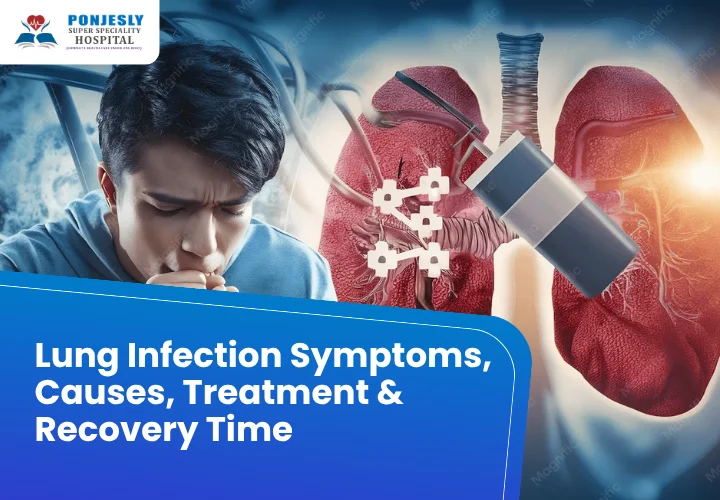
A lung infection is an infection caused by bacteria, viruses, or fungi that inflames the lungs, making it harder to breathe and get enough oxygen into the blood. It ranges from mild bronchitis to serious pneumonia that requires hospital care.
Recognising lung infection symptoms early can make a real difference in how fast you recover. Many people confuse lung infection symptoms with a common cold and wait too long to see a doctor. This guide breaks down everything from the causes and types of lung infections to their treatment and recovery time.
What is a lung infection?
Your lungs contain airways and millions of tiny air sacs called alveoli. When a harmful germ enters through breathing or close contact, it causes inflammation in these structures. Inflammation is a lung infection.
It can affect just the airways, as in bronchitis, or the air sacs themselves, as in pneumonia. The more lung tissue involved, the more serious the condition becomes.
Types of lung infection:
- Pneumonia: This infection affects the lung air sacs and can interfere with normal breathing. The condition may be caused by bacteria, viruses, or fungi
- Bronchitis: Infects the bronchial tubes. Usually viral. Less severe than pneumonia.
- Tuberculosis: Bacterial. Airborne spread. Needs long-term treatment.
- Fungal infection: From inhaling spores. More common with weak immunity.
Lung infection symptoms:
The most common lung infection symptoms include:
- Persistent cough – dry or with mucus (yellow, green, or blood-tinged)
- Chest pain – especially when breathing deeply or coughing
- Shortness of breath – breathing may feel harder than usual
- Fever and chills
- Fatigue – unusually tired even after resting
- Wheezing or rattling sounds when breathing
- Loss of appetite and body aches
- Rapid or laboured breathing
Lung infection symptoms in adults
Lung infection symptoms in adults under 65 typically include high fever with shaking chills, a productive cough, and chest pain that gets worse with deep breathing. These are the clearest warning signs.
But lung infection symptoms in adults over 65 can look very different. Older adults may not develop a fever at all. Instead, watch for sudden confusion, unusual weakness, or a drop in body temperature. These subtle signs are easy to miss, but in elderly patients, they’re often the only lung infection symptoms present before the condition becomes critical.
Seek emergency care immediately if you notice:
- Bacteria: Streptococcus pneumoniae commonly causes lung infections.
- Severe difficulty breathing or rapid breathing
- Fever above 39°C (102°F) that won’t come down
- Coughing up blood
- Sudden confusion or inability to stay awake
- Chest pain that keeps getting worse
Lung infection causes
Knowing the causes is key to prevention. The main lung infection causes are:
- Bacteria: Streptococcus pneumoniae is often linked to lung infections
- Viruses: Influenza, RSV, and COVID-19 can all trigger lung infections.
- Fungi: Aspergillus and similar fungi most often affect people with weakened immune systems.
- Weakened immunity: People with HIV, diabetes, or those on immunosuppressants are at higher risk.
- Smoking: Damages the lung’s natural defence system, making infection more likely.
- Air pollution or chemical exposure: Long-term exposure irritates lung tissue and lowers resistance.
- Hospitalisation or bedridden status: increases the risk of hospital-acquired pneumonia.
Pneumonia and lung infection – what’s the difference?
Pneumonia is a specific type of lung infection, but not all lung infections are pneumonia. Pneumonia infects the alveoli (air sacs), filling them with fluid or pus. This makes breathing harder and can significantly reduce blood oxygen levels.
Bronchitis affects the bronchial tubes and is usually less severe. Both need proper attention, but pneumonia is the one that can become life-threatening if left untreated, especially in the elderly, children, or people with existing health conditions.
Lung infection treatment
Treatment depends on what’s causing the infection. Proper diagnosis comes first:
- Bacterial infections: Treated with antibiotics. The specific antibiotic depends on the bacteria. Always complete the full course; stopping early creates antibiotic resistance.
- Viral infections: Antibiotics don’t work here. Rest, fluids, and fever-reducing medicine manage symptoms. Antivirals like oseltamivir may be used for influenza.
- Fungal infections: Treated with antifungal medication. These take weeks to months to fully resolve.
- Severe cases: May need hospitalisation with oxygen therapy, IV antibiotics, or breathing support machines.
Never self-medicate. Taking antibiotics for a viral infection does nothing and causes long-term harm through antibiotic resistance.The infection should be properly assessed before starting treatment.
Lung infection recovery time
| Infection type | Expected recovery | Severity |
|---|---|---|
| Mild bronchitis | 1–3 weeks | Mild |
| Viral pneumonia | 3–6 weeks | Moderate |
| Bacterial pneumonia | 4–8 weeks | Moderate |
| Severe / hospitalised pneumonia | 2–6 months | Severe |
| Fungal lung infection | Weeks to months | Severe |
Even after the main symptoms clear, fatigue and mild breathlessness can linger for weeks. That’s normal; your lungs need time to fully repair. Avoid heavy physical activity until your doctor clears you.
How to prevent a lung infection
- Get vaccinated – flu vaccine and pneumococcal vaccine reduce risk significantly
- Wash your hands regularly, especially before touching your face
- Quit smoking – it’s the single biggest modifiable risk factor
- Wear a mask in crowded or poorly ventilated spaces
- Manage existing conditions like diabetes or asthma well
- Stay hydrated and maintain good nutrition to support immunity
Frequently asked questions
1. Can a lung infection go away on its own?
Mild viral bronchitis can sometimes resolve with rest and fluids within 1 to 3 weeks. But bacterial pneumonia and fungal infections will not go away without medical treatment. If your symptoms last more than a week or are worsening, consult a doctor immediately.
2. How do I know if I have pneumonia or bronchitis?
Both cause cough, fever, and chest discomfort, but pneumonia is usually more severe. Pneumonia causes a higher fever, greater difficulty breathing, and can lower blood oxygen levels. A chest X-ray is the standard way doctors tell them apart. Never try to self-diagnose; visit a hospital for accurate testing.
3. How long is a lung infection contagious?
For viral infections, you are usually contagious from a day before symptoms appear until about 5 to 7 days after. For bacterial infections, you typically stop being contagious after 24 to 48 hours of antibiotic treatment. Your doctor can advise you based on your specific type of infection.
4. What foods help during lung infection recovery?
No specific food cures a lung infection, but good nutrition supports your immune system. Focus on warm fluids (water, soups, herbal tea), vitamin C-rich foods, and protein. Avoid alcohol and smoking during recovery, as both slow lung healing considerably.
5. When should I go to the hospital for a lung infection?
Go to the hospital immediately if you have: difficulty breathing, bluish lips or fingertips, fever above 39°C that won’t break, coughing up blood, chest pain that keeps worsening, or sudden confusion. These are signs that the infection may be severe and needs urgent care.
Noticing lung infection symptoms?
Do not wait. Our pulmonology team at Ponjesly Hospital provides accurate diagnosis, chest X-rays, sputum tests, and specialist respiratory care so your lung infection treatment starts right from day one.