

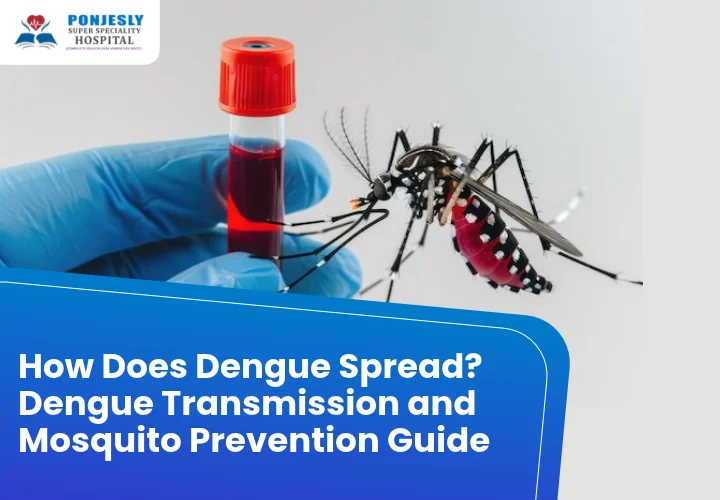
Dengue mainly spreads through the bite of an infected Aedes mosquito. When an Aedes mosquito bites a person who has dengue, it can acquire the dengue virus and later transmit it to another person through a bite. Understanding how dengue spreads can help families reduce mosquito exposure and take practical steps to prevent dengue transmission.
Dengue is a mosquito-borne viral infection. The spread of dengue is closely linked to infected mosquitoes, people who can become infected, and places where mosquitoes can breed. Preventing mosquito bites and removing water-holding containers can help reduce opportunities for transmission.
How Does Dengue Spread?
Dengue spreads mainly when an infected Aedes mosquito bites a person and transmits the dengue virus.
The basic transmission cycle is:
Infected person → Aedes mosquito bites infected person → mosquito acquires dengue virus → infected mosquito bites another person → virus is transmitted
This is the main way how does dengue spread can be understood. The infection is primarily transmitted through mosquitoes rather than ordinary contact between people.
When infected mosquitoes are present in an area, they can transmit dengue to other people through subsequent bites. This makes mosquito-bite prevention and mosquito-control measures important parts of reducing dengue transmission.
How Is Dengue Transmitted?
Dengue is transmitted mainly through the bite of an infected Aedes mosquito.
When a mosquito feeds on a person carrying dengue virus, the mosquito can acquire the virus. After becoming infected, the mosquito can transmit the virus when it bites another person.
In simple terms, dengue is transmitted by an infected mosquito moving the virus from an infected person to another person through its bite.
Dengue transmission does not normally happen through everyday activities such as:
- Touching
- Talking
- Sitting beside someone
- Sharing food
- Casual physical contact
Understanding how dengue spreads helps explain why mosquito protection is particularly important when dengue is present in a household or community.
Which Mosquito Causes Dengue?
Aedes mosquitoes, particularly Aedes aegypti, are important vectors of dengue.
If you are wondering which mosquito causes dengue, Aedes mosquitoes are the key mosquitoes involved in dengue transmission. Aedes aegypti is especially important because it can live around human dwellings and breed in small water-holding containers.
Common potential breeding places include:
- Water storage containers
- Buckets
- Flower pots and trays
- Discarded tyres
- Cans and bottles
- Uncovered containers
- Other objects that collect rainwater
People may also search for which mosquito spread dengue or dengue is spread by which mosquito. These searches refer to the same basic transmission question: dengue is mainly transmitted by infected Aedes mosquitoes.
Removing water-holding containers can help reduce mosquito breeding around homes.
Can Dengue Spread From Person to Person?
Dengue does not normally spread directly from person to person through casual contact.
A person cannot normally get dengue simply by touching or sitting next to someone who has the infection.
However, an infected person can provide a source of dengue virus for mosquitoes. When an Aedes mosquito bites an infected person, it can acquire the virus. The infected mosquito may then transmit dengue when it bites another person.
Therefore, the answer to does dengue spread from person to person is that dengue is primarily spread through infected mosquitoes rather than direct casual contact.
This is also why protecting someone with dengue from mosquito bites can help reduce opportunities for further transmission.
How Does Dengue Fever Spread in Communities?
Dengue fever can spread in communities when infected mosquitoes, people who can become infected, and suitable mosquito breeding conditions are present.
Aedes mosquitoes can breed in water collected around homes, workplaces and other built-up areas. If infected mosquitoes are present, they can transmit dengue through their bites.
Several factors can support dengue transmission:
- Uncovered water containers
- Standing water
- Rainwater collected in discarded items
- Increased mosquito breeding
- Frequent mosquito exposure
- Presence of dengue virus in the community
So, does dengue fever spread within communities? Yes, transmission can occur when infected mosquitoes bite people and continue the transmission cycle.
Community prevention should therefore focus on reducing breeding sites and protecting people from mosquito bites.
When Do Dengue Mosquitoes Bite?
Aedes mosquitoes can bite during the daytime, so mosquito protection should not be limited to nighttime.
People may encounter these mosquitoes while working, studying, travelling or carrying out daily activities.
To reduce mosquito exposure:
- Use an appropriate mosquito repellent as directed.
- Wear clothing that covers exposed skin.
- Use window and door screens where suitable.
- Keep indoor areas protected from mosquitoes.
- Use mosquito nets when appropriate.
- Remove standing water around the home.
Because dengue is transmitted by infected mosquitoes, reducing mosquito bites throughout the day is an important prevention measure.
How Can You Prevent Dengue Transmission?
Preventing mosquito bites and reducing mosquito breeding sites are key ways to help reduce dengue transmission.
Practical measures include:
- Remove standing water from containers around the home.
- Keep water storage containers properly covered.
- Empty and clean plant trays regularly.
- Remove discarded tyres, cans and other objects that can collect rainwater.
- Use mosquito repellent according to product instructions.
- Wear clothing that covers exposed skin.
- Keep doors and windows protected where possible.
- Regularly inspect indoor and outdoor areas for water-holding containers.
Since dengue can spread through infected mosquito bites, consistent mosquito control can help reduce opportunities for transmission.
What Are the Symptoms of Dengue?
Dengue may cause symptoms such as fever, headache, pain behind the eyes, muscle and joint pain, nausea and skin rash. Symptoms can vary from person to person, and some people may have mild or no symptoms.
For a detailed overview of dengue symptoms, warning signs and related information, read our guide on Dengue Fever Symptoms.
When Should You See a Doctor for Dengue?
If dengue is suspected, medical evaluation can help determine the appropriate care based on the person’s symptoms and condition.
Seek prompt medical attention if concerning symptoms such as:
- Repeated vomiting
- Bleeding
- Severe abdominal pain
- Breathing difficulty
- Unusual drowsiness
- Worsening illness
develop.
Dengue symptoms can change during the course of illness. If a person has persistent fever or develops concerning symptoms, it is important to seek professional medical advice rather than relying only on online information.
Dengue Care at Ponjesly Hospital, Nagercoil
If you or a family member develops persistent fever or symptoms that may be associated with dengue, professional medical evaluation can help determine the appropriate next steps.
Ponjesly Hospital in Nagercoil provides medical evaluation and healthcare support for patients experiencing fever and suspected infections. Healthcare professionals can assess symptoms and determine whether further examination, testing or monitoring may be appropriate based on the patient’s condition.
If dengue is suspected, consult a qualified healthcare professional for appropriate medical guidance.
Contact Ponjesly Hospital, Nagercoil, to book a consultation and discuss your symptoms with a healthcare professional.
FAQs About How Does Dengue Spread?
How does dengue spread from one person to another?
Dengue mainly spreads through the bite of an infected Aedes mosquito. A mosquito can acquire the dengue virus from an infected person and transmit it when it later bites another person.
How is dengue transmitted?
Dengue is transmitted mainly through the bite of an infected Aedes mosquito. Preventing mosquito bites and reducing mosquito breeding sites can help lower transmission.
Which mosquito causes dengue?
Aedes mosquitoes, particularly Aedes aegypti, are important vectors of dengue. These mosquitoes can breed in water-holding containers around homes and other built-up areas.
Which mosquito spreads dengue?
Aedes mosquitoes, especially Aedes aegypti, are important mosquitoes involved in dengue transmission. Reducing their breeding sites can help lower mosquito populations.
Does dengue spread through touching?
Dengue does not normally spread through casual physical contact. The main route of transmission is through the bite of an infected mosquito.
Does dengue fever spread from person to person?
Dengue fever does not normally spread directly through casual person-to-person contact. An infected person can provide a source of dengue virus for mosquitoes, which may then transmit the virus through subsequent bites.
Can dengue spread in a family?
Dengue can affect multiple people in a household if infected mosquitoes are present. An infected person can provide a source of dengue virus for mosquitoes that may later bite other people.
How can dengue transmission be prevented?
Dengue transmission can be reduced by preventing mosquito bites and eliminating mosquito breeding sites. Removing standing water, covering water containers and using appropriate mosquito protection are practical prevention measures.