

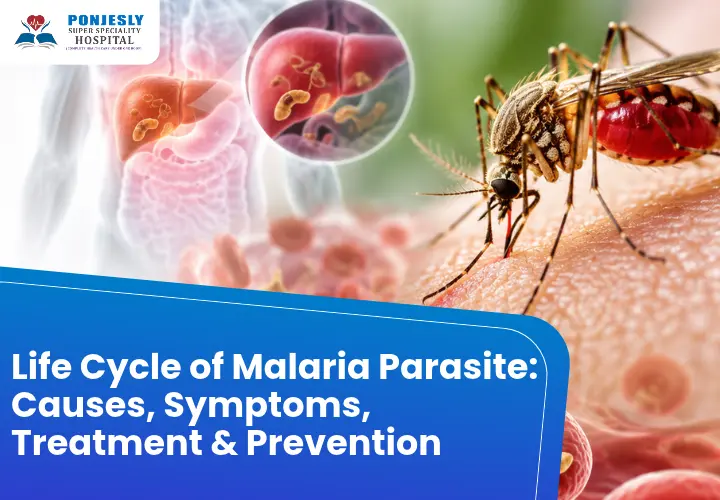
Malaria is a mosquito-borne disease caused by Plasmodium parasites and transmitted mainly through the bite of an infected female Anopheles mosquito. The parasite first enters the liver and then infects red blood cells, causing symptoms such as fever, chills, headache and fatigue. Early diagnosis and appropriate treatment can help prevent serious complications.
Understanding the life cycle of malaria helps explain how the infection spreads, affects the human body and can be prevented.
What Causes Malaria?
Malaria is caused by Plasmodium, a group of parasites that infect humans. The infection usually spreads when an infected female Anopheles mosquito bites a person and transfers the parasites into the bloodstream.
Five Plasmodium species are known to cause malaria in humans:
- Plasmodium falciparum
- Plasmodium vivax
- Plasmodium malariae
- Plasmodium ovale
- Plasmodium knowlesi
Among these, P. falciparum and P. vivax are particularly important because they can cause significant illness. Malaria is caused by a parasite, not a virus or bacteria.
In rare cases, malaria can also spread through infected blood, such as through blood transfusions or contaminated needles. It does not usually spread through ordinary contact, touching or sharing food with an infected person.
Life Cycle of Malaria Parasite
The life cycle of malaria involves two hosts: humans and female Anopheles mosquitoes. The parasite develops through several stages before it can continue spreading.
1. Transmission Through a Mosquito Bite
When an infected female Anopheles mosquito bites a person, it injects the parasite’s sporozoites into the bloodstream. These parasites travel to the liver, where the next stage of development begins.
2. Multiplication in the Liver
The sporozoites enter liver cells and multiply. They develop into forms that can infect red blood cells. In P. vivax and P. ovale infections, some parasites may remain dormant in the liver and cause a relapse later.
3. Infection of Red Blood Cells
The parasites enter red blood cells and multiply. The infected cells eventually rupture, releasing more parasites into the bloodstream. This process contributes to malaria fever symptoms, including fever, chills and sweating.
Repeated cycles of red blood cell infection can cause anaemia and, in severe cases, damage vital organs.
4. Transmission Back to Mosquitoes
Some parasites develop into sexual forms called gametocytes. When another female Anopheles mosquito bites an infected person, it takes up these gametocytes. The parasites develop inside the mosquito and can eventually be transmitted to another person.
This cycle explains how malaria continues to spread between infected mosquitoes and humans.
What Are the Symptoms of Malaria?
Malaria symptoms may begin around 10–15 days after an infected mosquito bite, although the timing can vary depending on the parasite species and individual circumstances.
Common symptoms include:
- Fever and chills
- Headache
- Sweating
- Muscle and body aches
- Tiredness and weakness
- Nausea and vomiting
- Reduced appetite
The first signs of malaria may resemble flu or other common infections. Therefore, symptoms alone cannot confirm malaria.
Some infections, particularly those caused by P. vivax and P. ovale, may recur because dormant parasites can remain in the liver.
When Is Malaria a Medical Emergency?
Severe malaria can become life-threatening if treatment is delayed. Warning signs include:
- Confusion or reduced consciousness
- Difficulty breathing
- Seizures
- Extreme weakness or fatigue
- Dark or bloody urine
- Yellowing of the skin or eyes
- Unusual bleeding
Seek emergency medical care if any of these symptoms occur. Do not wait for all symptoms to appear.
How Is Malaria Diagnosed?
Doctors usually confirm malaria through a blood test. The two commonly used methods are:
- Microscopy: A blood sample is examined under a microscope to identify malaria parasites.
- Rapid diagnostic test (RDT): A test detects specific parasite antigens in the blood and can provide results quickly.
If the initial result is negative but malaria is still suspected, a doctor may recommend repeat testing based on the patient’s condition and clinical assessment.
Early diagnosis helps doctors select appropriate treatment and reduce the risk of complications.
Malaria Treatment: What Are the Options?
Malaria treatment depends on the parasite species, infection severity, local drug resistance, age, weight and pregnancy status.
Artemisinin-based combination therapies are commonly used for uncomplicated P. falciparum malaria. Other species may require different medicines depending on local treatment guidance and parasite sensitivity.
For P. vivax and P. ovale, additional medicines may be needed to prevent relapse. Some of these treatments require testing for glucose-6-phosphate dehydrogenase (G6PD) deficiency before they can be prescribed safely.
Severe malaria requires urgent hospital treatment. Patients should not self-medicate or stop prescribed medicines early, even if the fever improves.
How Can Malaria Be Prevented?
Preventing mosquito bites and reducing mosquito breeding can lower the risk of malaria.
Practical prevention measures include:
- Sleep under insecticide-treated mosquito nets where appropriate.
- Use recommended mosquito repellents.
- Wear long-sleeved clothing, especially from dusk to dawn.
- Install window and door screens where possible.
- Remove stagnant water around homes when it can support mosquito breeding.
- Consult a healthcare professional about preventive medicines before travelling to malaria-risk areas.
People who develop fever after visiting a malaria-risk area should seek medical assessment promptly.
Malaria Care at Ponjesly Hospital, Nagercoil
Fever with chills, headache or unusual weakness should not be ignored, particularly when malaria is possible. Timely medical assessment can help identify the cause of fever and determine the next steps.
Patients in Nagercoil can contact Ponjesly Hospital, Nagercoil, for information about consultation and available diagnostic services. Confirm current test availability and appointment details directly with the hospital.
Frequently Asked Questions
1. What is the main cause of malaria?
Malaria is caused by Plasmodium parasites, which are usually transmitted to humans through the bite of an infected female Anopheles mosquito.
2. What are the four main stages in the malaria life cycle?
The main stages include transmission through a mosquito bite, multiplication in the human liver, infection and multiplication in red blood cells, and transmission back to mosquitoes through gametocytes.
3. Is malaria caused by a virus?
No. Malaria is caused by a parasite belonging to the genus Plasmodium, not by a virus.
4. Can malaria be cured?
Yes. Malaria can usually be treated with appropriate medicines when diagnosed correctly. The treatment depends on the parasite species, severity and other clinical factors.
5. Does malaria spread from person to person?
Malaria does not usually spread through casual contact. It is mainly transmitted through infected mosquitoes, although transmission through infected blood can occur in certain circumstances.
Conclusion
Understanding the life cycle of malaria helps explain how the parasite enters the body, multiplies and spreads. Recognising symptoms, confirming the infection through appropriate testing and starting prescribed treatment promptly are important steps in preventing serious complications. Mosquito-bite prevention also plays a key role in reducing transmission.
For reliable medical guidance, consult a qualified healthcare professional rather than relying on symptoms alone.
Medical reference: World Health Organization (WHO) –
https://www.who.int/news-room/fact-sheets/detail/malaria.
This article is for educational purposes and does not replace professional medical advice.